
Tổng quan phiên giao dịch
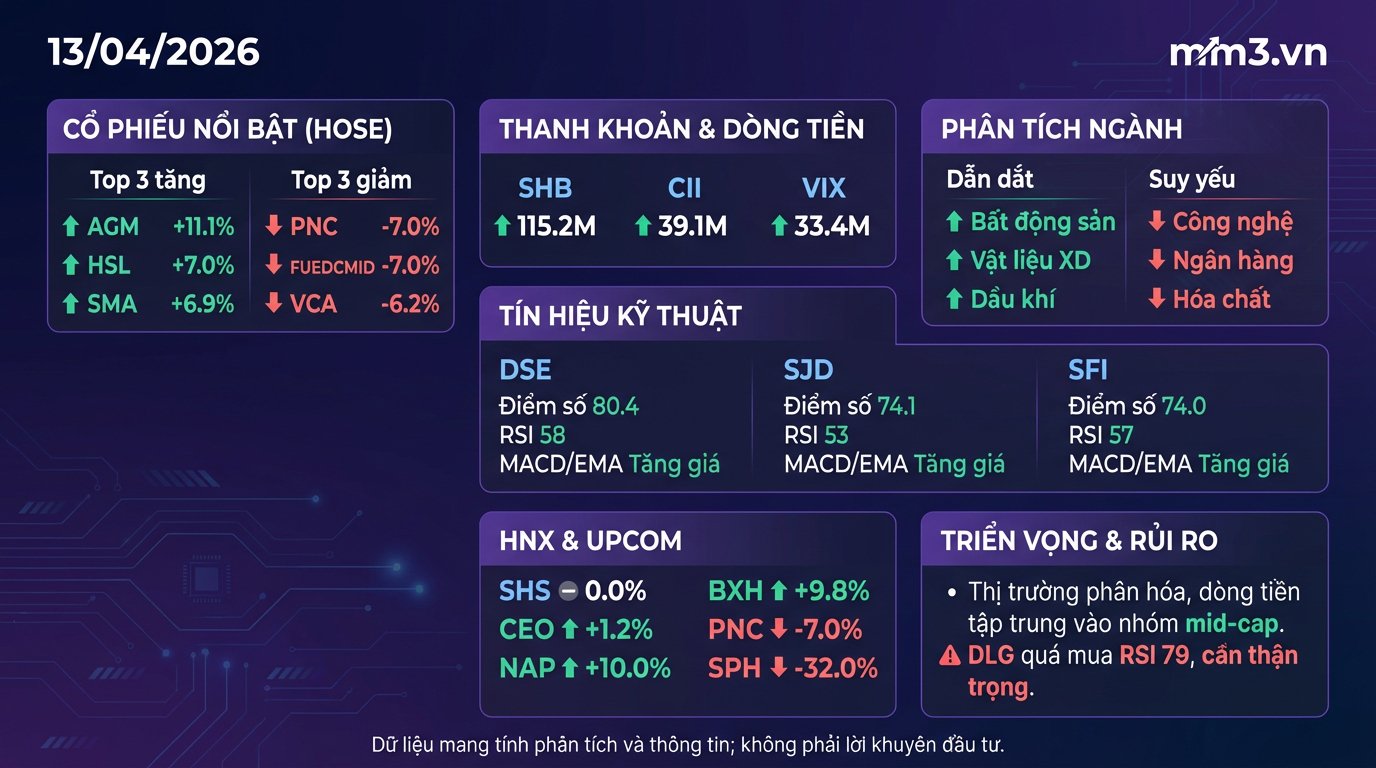
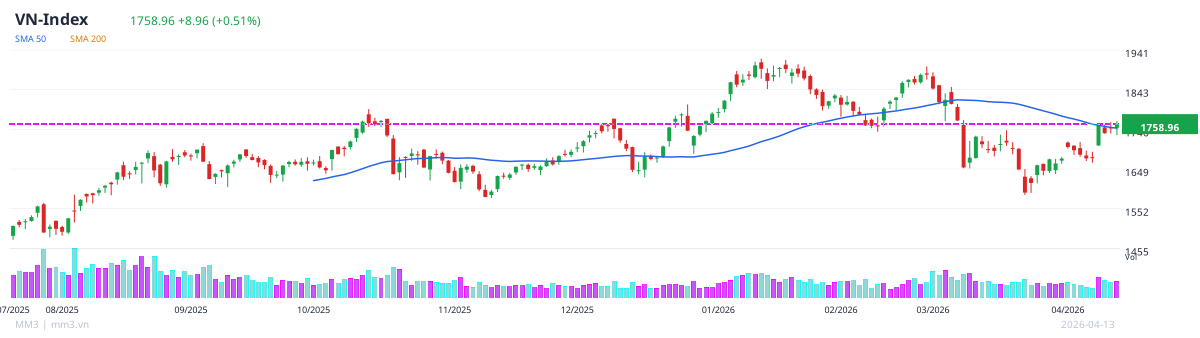
Thị trường chứng khoán Việt Nam ngày 13/04/2026 ghi nhận trạng thái phân hóa rõ nét. VN-Index tăng 0,5% lên 1.758,96 điểm, trong khi HNX-Index giảm nhẹ 0,1% xuống 251,66 điểm và UPCOM-Index tăng 0,3% lên 127,70 điểm. Thanh khoản toàn thị trường tiếp tục duy trì ở mức cao, cho thấy dòng tiền vẫn hiện diện nhưng chưa lan tỏa đồng đều sang toàn bộ nhóm vốn hóa lớn.
Ở HOSE, giá trị giao dịch và khối lượng tập trung mạnh ở một số mã dẫn dắt như SHB, CII, VIX và NVL. Diễn biến này phản ánh xu hướng luân chuyển dòng tiền sang các cổ phiếu có độ biến động cao, trong khi nhóm ngân hàng và công nghệ lại ghi nhận sự phân hóa khá rõ.
Nhóm cổ phiếu nổi bật trên HOSE
Nhóm bất động sản và vật liệu xây dựng là hai điểm sáng đáng chú ý trong phiên. VIC tăng 5,5% lên 160.000 đồng, NVL tăng 2,4% lên 17.200 đồng, còn VHM tăng 1,5% lên 122.900 đồng. Ở nhóm vật liệu, CII bật tăng 6,7% lên 19.800 đồng với thanh khoản hơn 39,1 triệu cổ phiếu, trong khi HHV và DPG cũng duy trì sắc xanh.
Ngược lại, nhóm ngân hàng và công nghệ chịu áp lực điều chỉnh. SHB giảm 2,6% xuống 15.000 đồng nhưng vẫn dẫn đầu toàn thị trường về khối lượng với hơn 115,2 triệu cổ phiếu; MBB giảm 0,9%, VPB giảm 1,5%, còn FPT mất 2,2% xuống 76.000 đồng. Diễn biến này cho thấy dòng tiền không rút ra khỏi thị trường, mà đang chọn lọc mạnh theo từng nhóm ngành và từng mã riêng lẻ.
Thanh khoản và dòng tiền
| Mã | Giá | Biến động | Khối lượng |
|---|---|---|---|
| SHB | 15.000 | -2,6% | 115,2 triệu |
| CII | 19.800 | +6,7% | 39,1 triệu |
| VIX | 18.050 | 0,0% | 33,4 triệu |
| NVL | 17.200 | +2,4% | 29,3 triệu |
| HPG | 27.800 | -0,7% | 23,0 triệu |
Về mặt phân bổ dòng tiền, khối lượng lớn nhất tiếp tục xuất hiện ở các cổ phiếu có tính đầu cơ cao hoặc có câu chuyện riêng. SHB, CII, VIX, NVL và HPG cùng nằm trong nhóm dẫn đầu thanh khoản, hàm ý nhà đầu tư vẫn ưu tiên giao dịch ngắn hạn hơn là nắm giữ theo xu hướng rộng.
Phân tích theo ngành
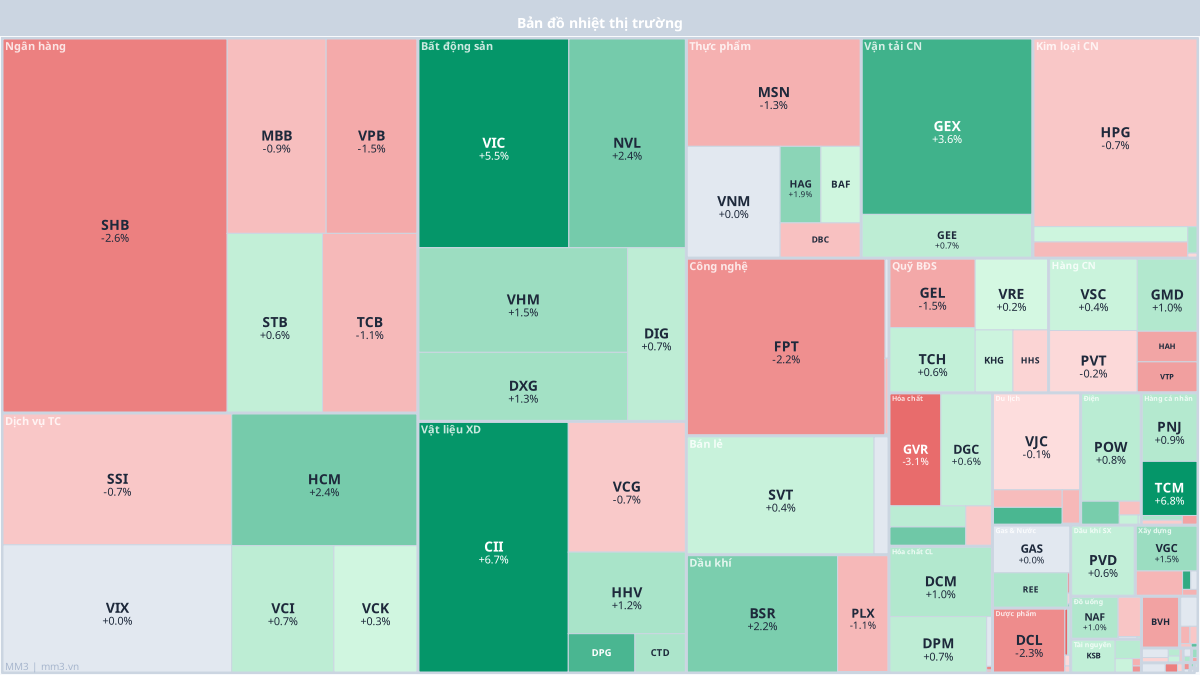
Nhóm bất động sản, vật liệu xây dựng và dầu khí thể hiện sức mạnh tương đối tốt hơn mặt bằng chung. VIC, NVL, VHM, CII và GEX là những đại diện đáng chú ý của dòng tiền tích cực. Trong khi đó, ngân hàng, công nghệ và một phần nhóm hóa chất lại ghi nhận áp lực chốt lời, đặc biệt ở các mã có thanh khoản cao.
Ở chiều ngược lại, FPT giảm 2,2%, GVR giảm 3,1%, SHB giảm 2,6% và MSN giảm 1,3%. Điều này cho thấy sự phân hóa không chỉ diễn ra giữa các ngành, mà còn ngay trong từng nhóm ngành có vốn hóa lớn.Tín hiệu kỹ thuật đáng chú ý
| Mã | Điểm tổng hợp | RSI | Tín hiệu |
|---|---|---|---|
| DSE | 80,4 | 58 | MACD/EMA tăng giá |
| SJD | 74,1 | 53 | MACD/EMA tăng giá |
| SFI | 74,0 | 57 | MACD/EMA tăng giá |
Trong nhóm tín hiệu kỹ thuật, DSE dẫn đầu với 80,4 điểm tổng hợp, tiếp theo là SJD và SFI. Đây đều là các mã có cấu trúc xu hướng ngắn hạn tích cực, với MACD và EMA đồng thuận theo hướng tăng giá. Tuy nhiên, DLG đã bước vào vùng RSI 79, cho thấy rủi ro quá mua đang gia tăng và biến động có thể mạnh hơn trong các phiên tới.
Diễn biến HNX và UPCOM
Trên HNX, SHS giao dịch sôi động nhất với hơn 24,6 triệu cổ phiếu, nhưng chỉ đi ngang ở mức 17.900 đồng. CEO tăng 1,2% với thanh khoản hơn 15,1 triệu cổ phiếu, trong khi NAP tăng trần 10,0%, BXH tăng 9,8%, PHN tăng 9,7% và SFN tăng 9,2%. Ở chiều giảm, KSQ mất 13,3% và SDA giảm 10,0%.
Trên UPCOM, độ phân hóa còn mạnh hơn khi nhiều mã tăng nóng song song với những cổ phiếu giảm sâu. ONW tăng 38,9%, PTE tăng 35,7%, GER tăng 25,0%, trong khi SPH giảm 32,0% và CAD giảm 16,7%. Diễn biến này cho thấy mặt bằng giao dịch vẫn rất chọn lọc, ưu tiên các câu chuyện riêng thay vì xu hướng đồng thuận của toàn sàn.
Triển vọng và rủi ro ngắn hạn
Trong bối cảnh VN-Index tiến sát vùng 1.760 điểm, thị trường đang duy trì trạng thái tích cực nhưng biên độ tăng không quá mạnh. Vùng kháng cự ngắn hạn quanh khu vực đỉnh gần nhất có thể tạo ra áp lực chốt lời nếu thanh khoản không tiếp tục được cải thiện. Ngược lại, vùng hỗ trợ gần sẽ là yếu tố cần theo dõi trong trường hợp nhịp điều chỉnh xuất hiện ở các mã dẫn dắt.
Về xác suất ngắn hạn, kịch bản tích lũy xen kẽ rung lắc vẫn chiếm ưu thế, nhất là khi dòng tiền đang tập trung nhiều ở mid-cap và các cổ phiếu có độ biến động cao. Nhà đầu tư cần theo dõi thêm sự lan tỏa của dòng tiền sang nhóm vốn hóa lớn, cũng như phản ứng của các mã đã có dấu hiệu quá mua như DLG.
Dữ liệu mang tính phân tích và thông tin; không phải lời khuyên đầu tư.