
Tổng quan phiên giao dịch
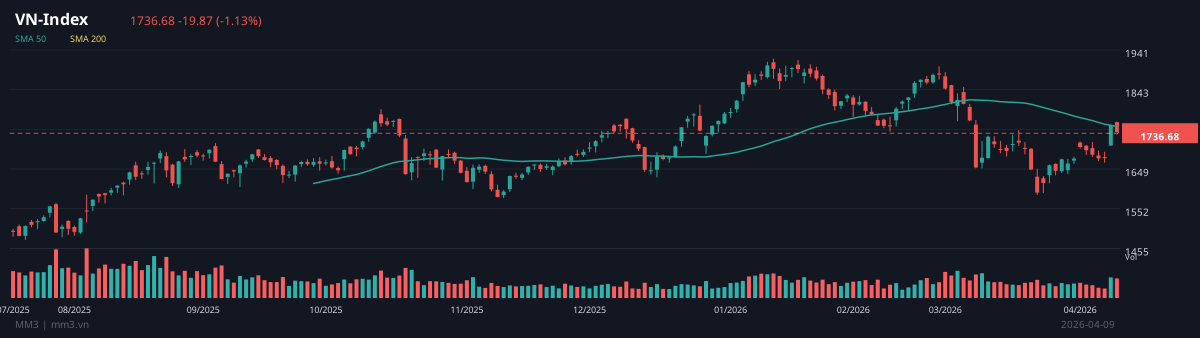
Phiên giao dịch ngày 09/04/2026 khép lại trong trạng thái điều chỉnh trên cả ba sàn, với áp lực bán lan tỏa nhưng không đồng đều giữa các nhóm cổ phiếu. VNINDEX lùi về 1.736,68 điểm, giảm 1,1%; HNXINDEX giảm 0,9% xuống 250,98 điểm; trong khi UPCOMINDEX cũng hạ 0,2% về 127,50 điểm.
Bức tranh chung cho thấy thị trường vẫn trong pha phân hóa mạnh, dòng tiền có xu hướng tập trung vào một số mã có câu chuyện riêng thay vì mở rộng sang toàn bộ nhóm ngành. Thanh khoản vẫn duy trì ở mức cao trên HOSE, nhưng độ rộng thị trường nghiêng về bên giảm, hàm ý nhịp hồi phục bền vững chưa có thêm xác nhận rõ ràng.
Diễn biến nổi bật trên HOSE
Trên HOSE, nhóm cổ phiếu tăng mạnh nhất tiếp tục ghi nhận nhiều mã biến động tốt trong bối cảnh thị trường chung giảm điểm. Dẫn đầu là EVG tăng 7,0% lên 7.070 đồng/cp, theo sau là SJS tăng 6,9% lên 52.700 đồng/cp và DAH tăng 6,7% lên 3.180 đồng/cp.
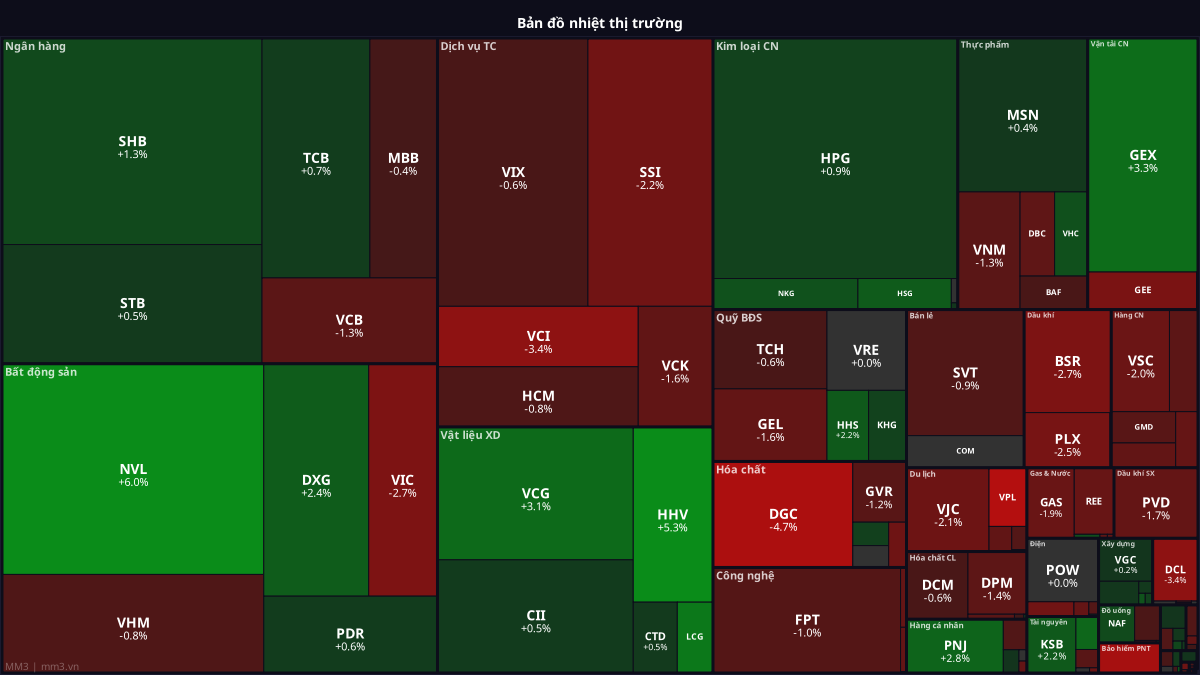
Ở chiều ngược lại, áp lực chốt lời xuất hiện tại một số mã giảm sâu như DGC mất 4,7% còn 53.100 đồng/cp, BVH giảm 4,4% xuống 79.800 đồng/cp và DCL lùi 3,4% về 45.000 đồng/cp. Nhịp điều chỉnh này cho thấy dòng tiền đang chọn lọc rất rõ, không còn lan tỏa đồng đều theo nhóm vốn hóa.
Thanh khoản và dòng tiền
Thanh khoản HOSE vẫn tập trung mạnh ở các mã dẫn dắt về khối lượng giao dịch. SHB khớp 85,7 triệu cổ phiếu, NVL đạt 81,7 triệu cổ phiếu, VIX đạt 55,5 triệu cổ phiếu, kế đến là HPG với 51,6 triệu cổ phiếu.
Diễn biến này phản ánh dòng tiền ưu tiên ngân hàng, bất động sản và dịch vụ tài chính, trong khi nhà đầu tư vẫn giữ trạng thái phòng thủ ở nhiều nhóm còn lại. Mức độ tập trung cao vào vài mã lớn thường là dấu hiệu của thị trường chọn lọc, thay vì một nhịp tăng đồng thuận.
Tín hiệu kỹ thuật nổi bật
Về kỹ thuật, một số mã vẫn giữ được xung lực tích cực dù bối cảnh chung chưa thuận lợi. VIX có điểm tổng hợp 77,4 với RSI 63, MACD tăng giá nhưng EMA còn giảm; VIC đạt 74,6 với RSI 57, MACD tăng giá và EMA tăng; VSC đạt 73,9 với RSI 48, MACD tăng giá và EMA tăng.
Điều này cho thấy bên mua vẫn hiện diện tại một số cổ phiếu riêng lẻ, song độ bền của xu hướng tăng cần thêm xác nhận từ thanh khoản và mặt bằng thị trường chung. Khi EMA còn phân hóa, xác suất rung lắc trong các nhịp hồi thường khá cao.
Phân hóa theo ngành
Ngân hàng, vật liệu xây dựng và kim loại công nghiệp là ba nhóm giữ được vai trò đỡ nhịp thị trường trong phiên. Trong đó, SHB, STB, TCB vẫn thu hút dòng tiền, còn VCG, HHV, LCG và HPG cho thấy lực cầu vẫn hiện diện ở một số mã dẫn dắt.
Ngược lại, dịch vụ tài chính, công nghệ, dầu khí và hóa chất chịu áp lực điều chỉnh rõ hơn. Các mã như VIX, SSI, VCI, FPT, BSR và DGC đều cho thấy tín hiệu suy yếu tương đối trong phiên, làm giảm khả năng lan tỏa của nhịp hồi.
Diễn biến đáng chú ý trên HNX và UPCOM
Trên HNX, nhóm tăng mạnh ghi nhận các mã biến động tích cực như VLA tăng 10,0%, NHC tăng 10,0% và MAC tăng 9,9%. Tuy nhiên, mặt khác thị trường cũng chứng kiến áp lực giảm ở SHS mất 3,2% và CEO giảm 1,1%, cho thấy độ phân hóa vẫn rất lớn.
Trên UPCOM, biên độ dao động còn mạnh hơn khi ONW tăng 38,9%, DCH tăng 25,0% và GER tăng 25,0%; chiều giảm sâu có PJS mất 39,9% và SPH giảm 32,0%. Đây là tín hiệu cho thấy dòng tiền đầu cơ vẫn hoạt động, nhưng rủi ro biến động ngắn hạn ở nhóm vốn hóa nhỏ là rất cao.
Triển vọng và rủi ro ngắn hạn
Về mặt kỹ thuật, vùng hỗ trợ gần của VNINDEX đang nằm quanh 1.730 điểm, trong khi vùng kháng cự đáng chú ý nằm ở khu vực 1.750–1.760 điểm. Nếu chỉ số giữ được vùng hỗ trợ này cùng sự cải thiện của độ rộng thị trường, khả năng xuất hiện nhịp hồi kỹ thuật sẽ cao hơn.
Tuy nhiên, rủi ro vẫn đến từ trạng thái phân hóa mạnh, thanh khoản tập trung và sự thiếu đồng thuận giữa các nhóm ngành. Trong bối cảnh đó, thị trường nhiều khả năng còn rung lắc trong ngắn hạn trước khi hình thành xu hướng rõ ràng hơn ở các phiên kế tiếp.
Lưu ý: nội dung trên chỉ mang tính phân tích và thông tin thị trường.