
Tóm tắt
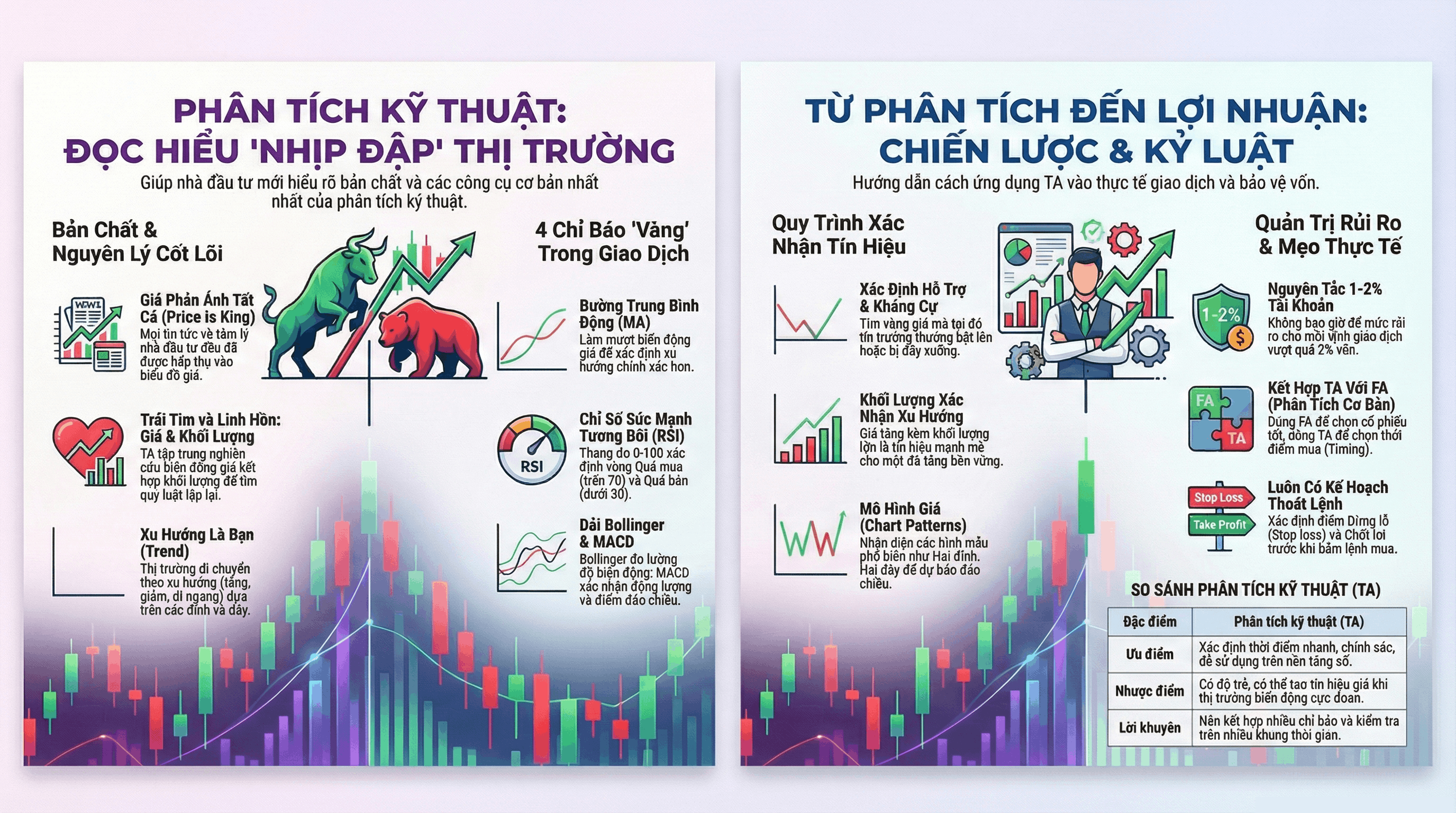
Bài viết này trình bày chi tiết về Phân tích kỹ thuật (Technical Analysis - TA), bao gồm lý thuyết nền tảng, các công cụ phổ biến (đường trung bình động, RSI, MACD, Bollinger Bands), mô hình giá (trendlines, support/resistance, chart patterns), chỉ báo khối lượng, quản lý rủi ro qua điểm dừng và kích thước vị thế, cũng như cách kết hợp TA với FA để tối ưu hoá chiến lược giao dịch. Bài viết phù hợp cho nhà đầu tư ngắn hạn, trader và những ai muốn hiểu sâu về hành vi giá và tâm lý thị trường phản ánh vào đồ thị.
Giải thích khái niệm/định nghĩa chi tiết
Phân tích kỹ thuật (TA) là phương pháp dự báo hành vi giá trong tương lai dựa trên dữ liệu giá và khối lượng giao dịch trong quá khứ. Giả thiết cốt lõi của TA là: giá phản ánh tất cả thông tin; giá di chuyển theo xu hướng; lịch sử có xu hướng lặp lại do tâm lý nhà đầu tư. TA không tập trung vào yếu tố cơ bản doanh nghiệp mà phân tích mô hình, chỉ báo và khối lượng trên biểu đồ để tìm cơ hội giao dịch.
Các công cụ và chỉ báo kỹ thuật quan trọng
Đường trung bình động (Moving Averages - MA):Simple MA (SMA) và Exponential MA (EMA): SMA tính trung bình đơn giản, EMA ưu tiên giá gần hơn. MA giúp xác định xu hướng và làm mịn biến động giá.
Các chiến lược crossover: ví dụ EMA 50 cắt EMA 200 lên trên là tín hiệu bullish (golden cross), ngược lại là bearish (death cross).
Chỉ số sức mạnh tương đối (RSI):RSI đo động lượng và dao động trong thang 0-100. Thường dùng mức 70 là quá mua, 30 là quá bán. Kết hợp phân kỳ RSI-giá để phát hiện đảo chiều.
MACD:Chỉ báo động lượng gồm MACD line và Signal line, histogram thể hiện khoảng cách. Dùng để xác nhận xu hướng và tìm điểm vào/ra.
Bollinger Bands:Gồm dải trên và dải dưới quanh SMA, phản ánh độ biến động. Giá chạm dải trên có thể là quá mua, chạm dải dưới có thể là quá bán; cũng được dùng để đo squeeze (độ co hẹp) báo hiệu biến động lớn sắp xảy ra.
Mô hình giá (Chart Patterns):Head and Shoulders, Double Top/Bottom, Triangles, Flags, Pennants — mỗi mô hình cho gợi ý xu hướng tiếp diễn hoặc đảo chiều.
Support & Resistance:Vùng hỗ trợ là nơi giá có xu hướng bật lên; vùng kháng cự là nơi giá gặp áp lực bán. Việc xác định đúng vùng này giúp đặt điểm dừng và mục tiêu hợp lý.
Khối lượng (Volume):Khối lượng xác nhận sức mạnh xu hướng: tăng giá kèm tăng volume là tín hiệu mạnh; giảm giá kèm volume thấp có thể cho thấy sự thiếu quyết tâm của phe bán.
Vận hành & quy định liên quan
Một số lưu ý khi áp dụng TA trên các nền tảng giao dịch:
Độ trễ chỉ báo: nhiều chỉ báo (như MA) là theo sau xu hướng; trader cần kết hợp dấu hiệu sớm (leading indicators) và chỉ báo xác nhận.
Độ chính xác khác nhau giữa khung thời gian: tín hiệu trên khung thời gian ngắn có thể nhiễu hơn; khung dài hạn có ít tín hiệu hơn nhưng đáng tin cậy hơn.
Quy định về đặt lệnh tự động: một số broker/electronic trading platforms hỗ trợ đặt lệnh tự động dựa trên tín hiệu kỹ thuật; cần kiểm tra giới hạn và rủi ro kỹ thuật (điểm gián đoạn kết nối, slippage).
Ứng dụng/ảnh hưởng tới nhà đầu tư
TA hữu dụng cho trader ngắn hạn lẫn nhà đầu tư trung/dài hạn trong nhiều trường hợp:
Timing: kết hợp TA với FA để xác định thời điểm tốt mua vào hoặc bán ra, ví dụ mua cổ phiếu có nền tảng tốt (FA) khi giá phá vỡ kháng cự mạnh (TA).
Quản lý rủi ro: TA giúp đặt stop loss và take profit hợp lý dựa trên mức hỗ trợ/kháng cự và ATR (Average True Range) để xác định biến động bình quân.
Chiến lược giao dịch tự động: nhiều hệ thống giao dịch thuật toán dựa trên chỉ báo TA để thực thi chiến lược mua bán có kỷ luật.
Những lưu ý, rủi ro và mẹo thực tế
Tránh quá tối ưu hoá: curve-fitting với dữ liệu lịch sử có thể dẫn tới chiến lược không hoạt động trong tương lai.
Kết hợp nhiều công cụ: không phụ thuộc vào một chỉ báo; dùng xác nhận giữa volume, mô hình giá và chỉ báo động lượng.
Quản lý vốn: xác định kích thước vị thế theo tỷ lệ rủi ro trên vốn (ví dụ không rủi ro quá 1-2% tài khoản cho mỗi trade).
Backtest kỹ càng: kiểm tra chiến lược trên dữ liệu lịch sử đa khung thời gian và điều kiện thị trường khác nhau.
Luôn có kế hoạch thoát: trước khi vào lệnh xác định stop loss và mục tiêu lợi nhuận; không để cảm xúc chi phối.
FAQ
Q1: TA có hiệu quả không trong thị trường biến động mạnh?
A1: TA vẫn hữu ích để quản lý rủi ro và xác định các mức quan trọng, nhưng trong biến động cực đoan, nhiều chỉ báo có thể cho tín hiệu sai. Kết hợp quản trị rủi ro và FA giúp giảm thiểu rủi ro.
Q2: Nên dùng khung thời gian nào?
A2: Tuỳ chiến lược: trader ngày dùng khung 1-15 phút, swing trader sử dụng 4h-1D, nhà đầu tư dài hạn dùng 1W-1M. Luôn kiểm tra sự phù hợp tín hiệu giữa các khung thời gian.
Q3: Tôi nên dùng bao nhiêu chỉ báo?
A3: Không có con số cố định; ưu tiên 2-4 chỉ báo từ các loại khác nhau (trend, momentum, volatility, volume) để tránh trùng lặp thông tin.