Tóm tắt
Bài viết này trình bày sâu và chi tiết về Phân tích cơ bản (Fundamental Analysis - FA) dành cho nhà đầu tư chứng khoán và thị trường tài chính. Nội dung bao gồm định nghĩa, mục tiêu, các chỉ số tài chính chính (về lợi nhuận, thanh khoản, đòn bẩy, hiệu quả sử dụng tài sản, định giá), phương pháp phân tích báo cáo tài chính, phân tích ngành, mô hình doanh nghiệp, các yếu tố vĩ mô ảnh hưởng, cách áp dụng FA vào quyết định mua/bán, quản trị rủi ro và ví dụ minh họa. Bài viết cũng cung cấp checklist thực tế, công thức tính quan trọng và phần FAQ để giải đáp thắc mắc phổ biến.
Giải thích khái niệm/định nghĩa chi tiết
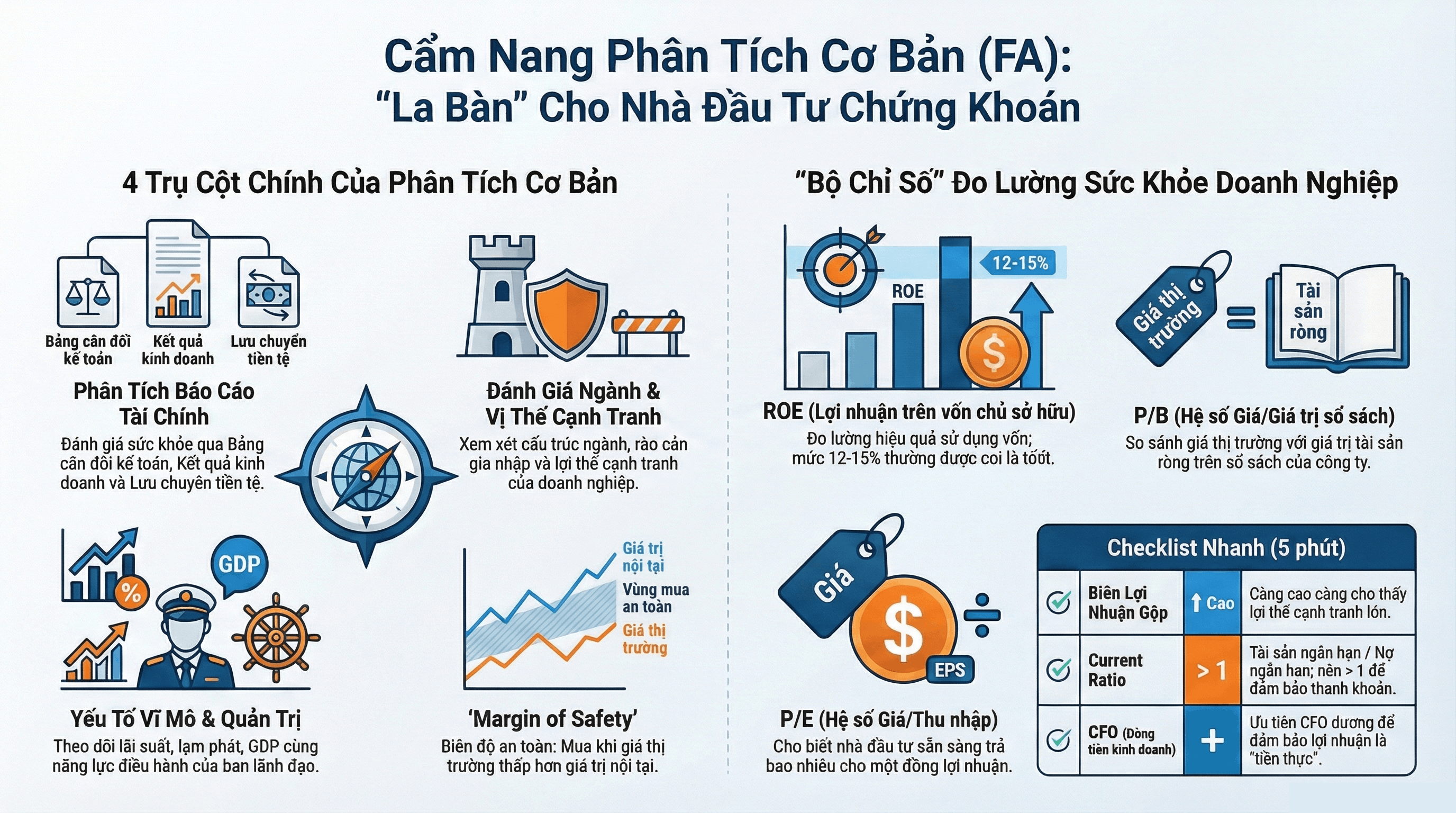
Phân tích cơ bản (Fundamental Analysis - FA) là phương pháp đánh giá giá trị nội tại của một doanh nghiệp hoặc công cụ tài chính dựa trên các yếu tố tài chính, hoạt động kinh doanh, môi trường ngành nghề và bối cảnh kinh tế vĩ mô. Mục tiêu là xác định giá trị hợp lý (intrinsic value) và so sánh với giá thị trường để ra quyết định đầu tư: mua khi thị trường đánh giá thấp hơn giá trị nội tại (undervalued), bán khi giá thị trường cao hơn giá trị nội tại (overvalued), hoặc giữ khi giá tiệm cận giá trị thực.
Các thành phần chính của FA gồm:
Phân tích báo cáo tài chính: báo cáo kết quả kinh doanh (P&L), bảng cân đối kế toán (Balance Sheet), báo cáo lưu chuyển tiền tệ (Cash Flow Statement).
Định giá: sử dụng các mô hình như P/E, P/B, EV/EBITDA, Discounted Cash Flow (DCF) để ước lượng giá trị nội tại.
Phân tích ngành và cạnh tranh: đánh giá cấu trúc ngành (Porter 5 forces), vị thế cạnh tranh, rào cản gia nhập, chu kỳ kinh doanh.
Yếu tố quản trị và rủi ro phi tài chính: chất lượng ban lãnh đạo, quản trị công ty, rủi ro pháp lý, tuân thủ, và ESG (môi trường, xã hội, quản trị).
Yếu tố vĩ mô: lãi suất, lạm phát, tăng trưởng GDP, chính sách tiền tệ và thuế, tỷ giá hối đoái.
Phân tích chỉ số tài chính quan trọng
FA dựa nhiều vào các chỉ số tài chính. Dưới đây là các chỉ số cốt lõi mà nhà đầu tư cần hiểu (cùng công thức và ý nghĩa):
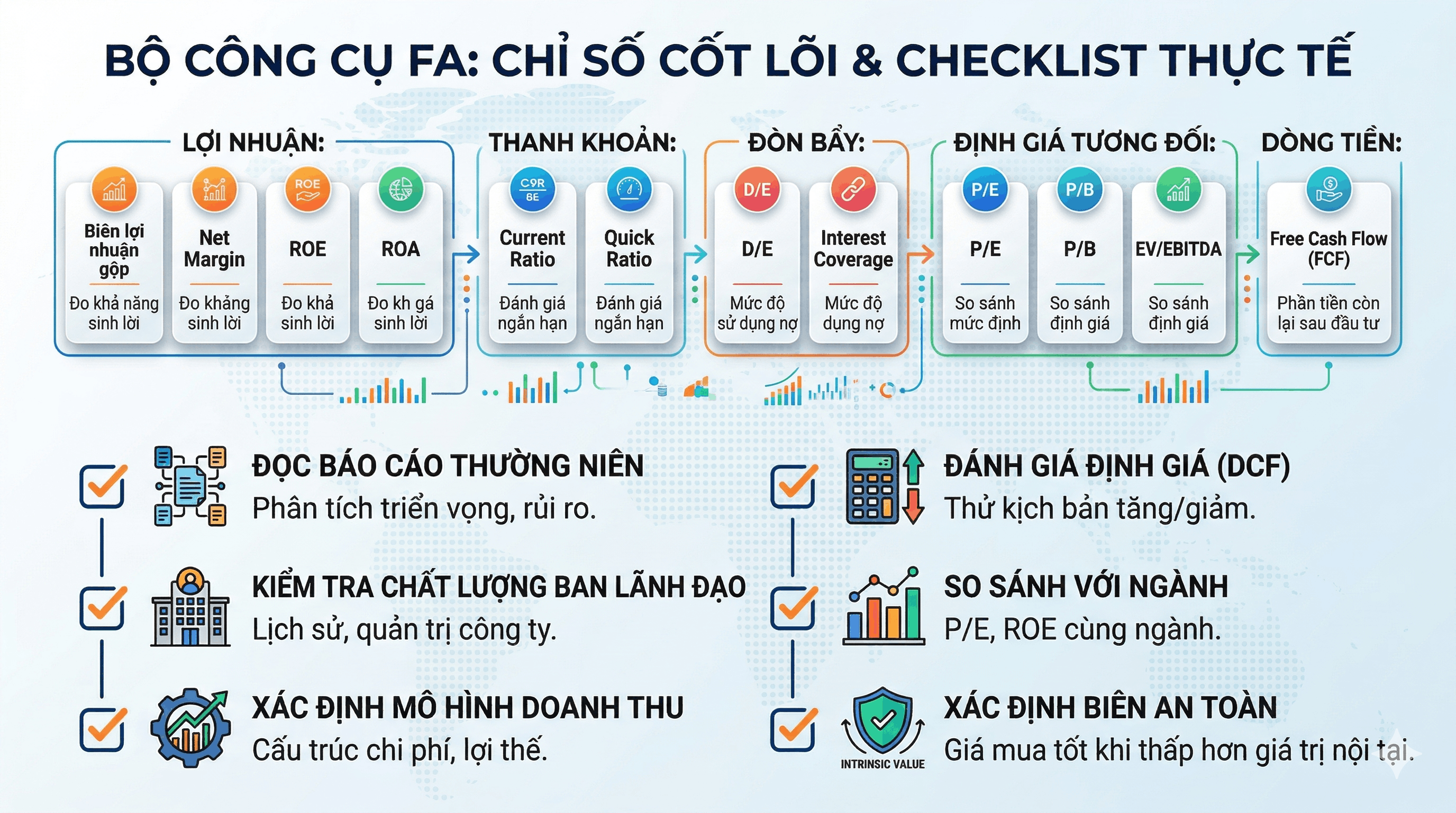
Tỷ suất lợi nhuận:Biên lợi nhuận gộp = (Doanh thu - Giá vốn hàng bán) / Doanh thu. Đo lường khả năng tạo lợi nhuận từ hoạt động chính.
Lợi nhuận ròng (Net Margin) = Lợi nhuận sau thuế / Doanh thu. Thể hiện lợi nhuận ròng sau mọi chi phí.
ROE (Return on Equity) = Lợi nhuận sau thuế / Vốn cổ đông. Đo lường hiệu quả sinh lời trên vốn chủ sở hữu.
ROA (Return on Assets) = Lợi nhuận sau thuế / Tổng tài sản. Đo hiệu quả sử dụng tài sản.
Thanh khoản và khả năng trả nợ:Current Ratio = Tài sản ngắn hạn / Nợ ngắn hạn. Đánh giá khả năng trả nợ ngắn hạn.
Quick Ratio = (Tài sản ngắn hạn - Hàng tồn kho) / Nợ ngắn hạn. Đo lường thanh khoản ngay lập tức.
Đòn bẩy tài chính:D/E (Debt-to-Equity) = Tổng nợ / Vốn chủ sở hữu. Đánh giá mức độ sử dụng nợ.
Interest Coverage = EBIT / Chi phí lãi vay. Đo khả năng công ty trang trải chi phí lãi.
Định giá tương đối:P/E (Price to Earnings) = Giá thị trường / EPS (thu nhập trên mỗi cổ phiếu). So sánh mức định giá giữa các công ty cùng ngành.
P/B (Price to Book) = Giá thị trường / Giá trị sổ sách. Thích hợp cho ngành có tài sản lớn (ngân hàng, bất động sản).
EV/EBITDA: So sánh giá trị doanh nghiệp (Enterprise Value) với khả năng sinh lời trước lãi, thuế, khấu hao và khấu hao.
Dòng tiền:Free Cash Flow (FCF) = Operating Cash Flow - Capital Expenditure. Dòng tiền tự do thể hiện phần tiền còn lại sau đầu tư có thể trả cổ tức, mua lại cổ phiếu hoặc trả nợ.
Vận hành & quy định liên quan
Một số yếu tố vận hành và quy định cần lưu ý khi áp dụng FA:
Báo cáo tài chính phải tuân thủ chuẩn mực kế toán (VietNam VAS hoặc IFRS tuỳ từng doanh nghiệp). Nhà đầu tư cần kiểm tra chữ ký kiểm toán, ý kiến kiểm toán (unqualified, qualified, adverse).
Công bố thông tin định kỳ và bất thường: doanh nghiệp niêm yết có nghĩa vụ công bố báo cáo quý, báo cáo năm, và thông báo thông tin quan trọng (tin thâu tóm, thay đổi lãnh đạo, phát hành thêm cổ phiếu). Việc tuân thủ minh bạch ảnh hưởng trực tiếp tới độ tin cậy của dữ liệu FA.
Quy định liên quan tới lợi ích cổ đông và giao dịch nội bộ: kiểm tra các giao dịch liên quan, phát hành cổ phiếu ESOP, hoặc cổ tức bằng cổ phiếu có thể pha loãng EPS.
Rủi ro pháp lý và thuế: thay đổi chính sách thuế, quy định ngành (dược, năng lượng) có thể tác động mạnh tới lợi nhuận tương lai.
Ứng dụng/ảnh hưởng tới nhà đầu tư
Phân tích cơ bản là công cụ quan trọng cho cả nhà đầu tư giá trị (value investing) lẫn nhà đầu tư dài hạn. Ứng dụng cụ thể gồm:
Chọn cổ phiếu giá trị: tìm kiếm doanh nghiệp có triển vọng lợi nhuận bền vững nhưng đang bị thị trường định giá thấp (P/E thấp, P/B thấp nhưng chất lượng tài sản và lợi nhuận tốt).
Đầu tư tăng trưởng: tập trung vào doanh nghiệp có tăng trưởng doanh thu và lợi nhuận cao, ROE/ROA tăng đều, và dòng tiền hoạt động tốt.
Quản lý rủi ro danh mục: sử dụng FA để xác định mức đòn bẩy an toàn, tránh cổ phiếu có cấu trúc nợ cao hoặc dòng tiền yếu.
Thời điểm vào/ra: FA kết hợp với phân tích định giá (DCF) giúp xác định biên an toàn (margin of safety) và thời điểm phù hợp để mua khi giá xuống dưới giá trị nội tại.
Những lưu ý, rủi ro và mẹo thực tế
Không hoàn toàn tin vào số liệu lịch sử: Báo cáo tài chính phản ánh dữ liệu quá khứ, cần dự báo và hiệu chỉnh để phản ánh triển vọng tương lai (ước tính tăng trưởng, biên lợi nhuận, CAPEX).
Chú ý thanh khoản cổ phiếu: cổ phiếu có kết quả tốt nhưng thanh khoản thấp có thể khó thoát vị thế.
Kiểm tra tính bền vững của lợi nhuận: tách biệt lợi nhuận một lần (non-recurring) với lợi nhuận từ hoạt động cốt lõi.
Sử dụng nhiều chỉ số và góc nhìn: không dựa vào chỉ một chỉ số (ví dụ chỉ P/E). Kết hợp phân tích dòng tiền, ROE, đòn bẩy và chất lượng quản trị.
Thực hành Sensitivity Analysis: khi dùng DCF, kiểm tra kịch bản tăng/giảm doanh thu, biên lợi nhuận, tỷ lệ chiết khấu để đánh giá biên an toàn.
Tạo checklist phân tích FA: đọc báo cáo thường niên, phân tích ban lãnh đạo, mô hình doanh thu, cấu trúc chi phí, và rủi ro chính.
FAQ
Q1: Phân tích cơ bản khác gì với phân tích kỹ thuật?
A1: FA tập trung vào giá trị nội tại dựa trên yếu tố cơ bản của doanh nghiệp và vĩ mô; TA tập trung vào hành vi giá, mô hình giá và khối lượng để dự báo biến động ngắn hạn. Hai phương pháp có thể kết hợp để tối ưu hoá thời điểm vào/ra.
Q2: Mức độ chi tiết cần phân tích đến đâu cho nhà đầu tư cá nhân?
A2: Tùy vào chiến lược: nhà đầu tư dài hạn nên phân tích sâu hơn (báo cáo 5 năm, mô hình DCF), nhà đầu tư trung/ngắn hạn có thể tập trung vào chỉ số eps, doanh thu, và các sự kiện ngắn hạn.
Q3: DCF có phải là phương pháp định giá tốt nhất?
A3: DCF là phương pháp chuẩn mực để định giá theo dòng tiền nhưng nhạy cảm với giả định. Nên kết hợp DCF với định giá tương đối (P/E, EV/EBITDA).