
Tóm tắt
Bài viết giải thích chi tiết về đơn vị giao dịch (lô): khái niệm, cách tính, ảnh hưởng tới chiến lược giao dịch và ví dụ minh họa cho nhà đầu tư cá nhân và tổ chức.
Giải thích khái niệm/định nghĩa chi tiết
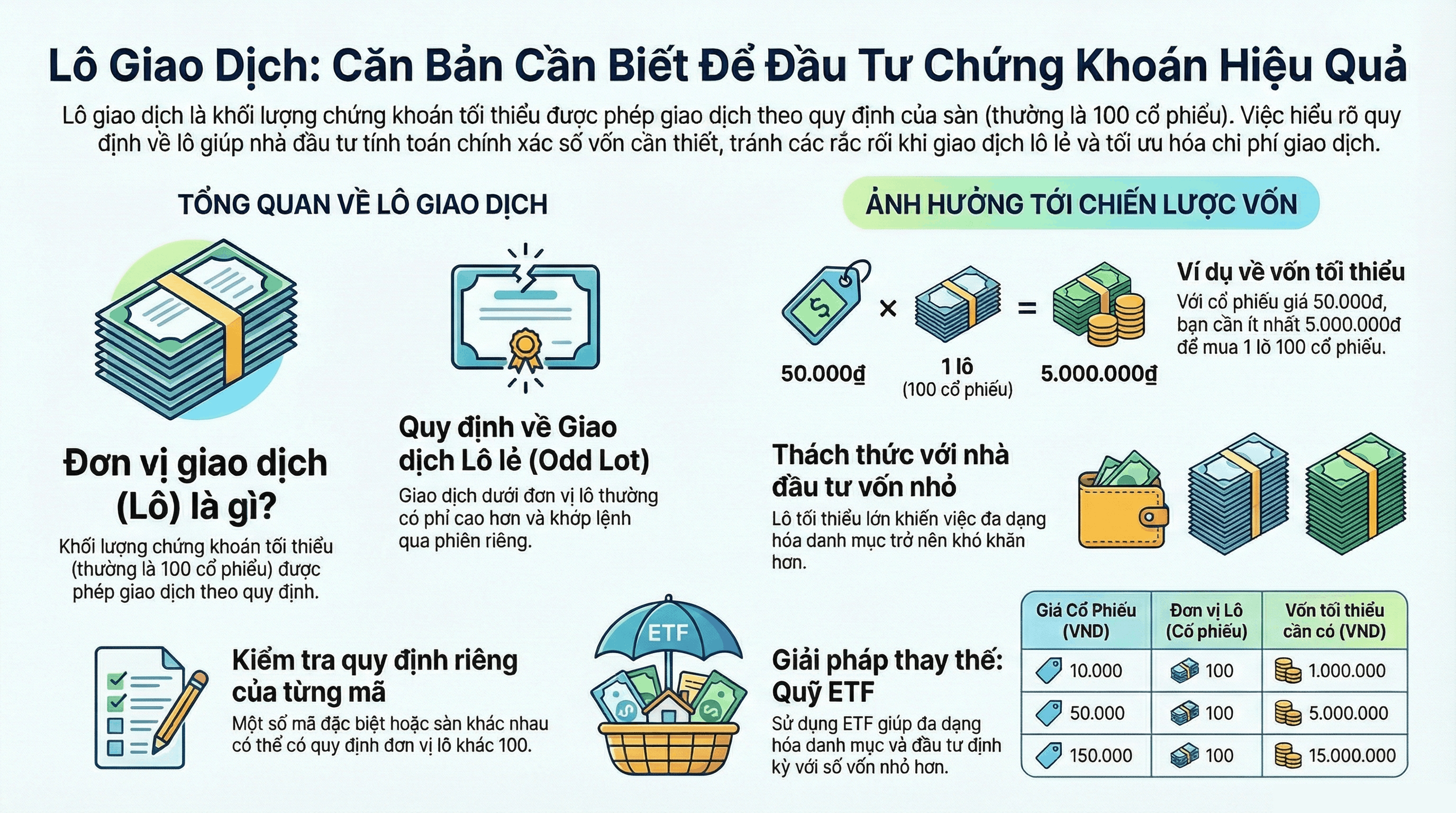
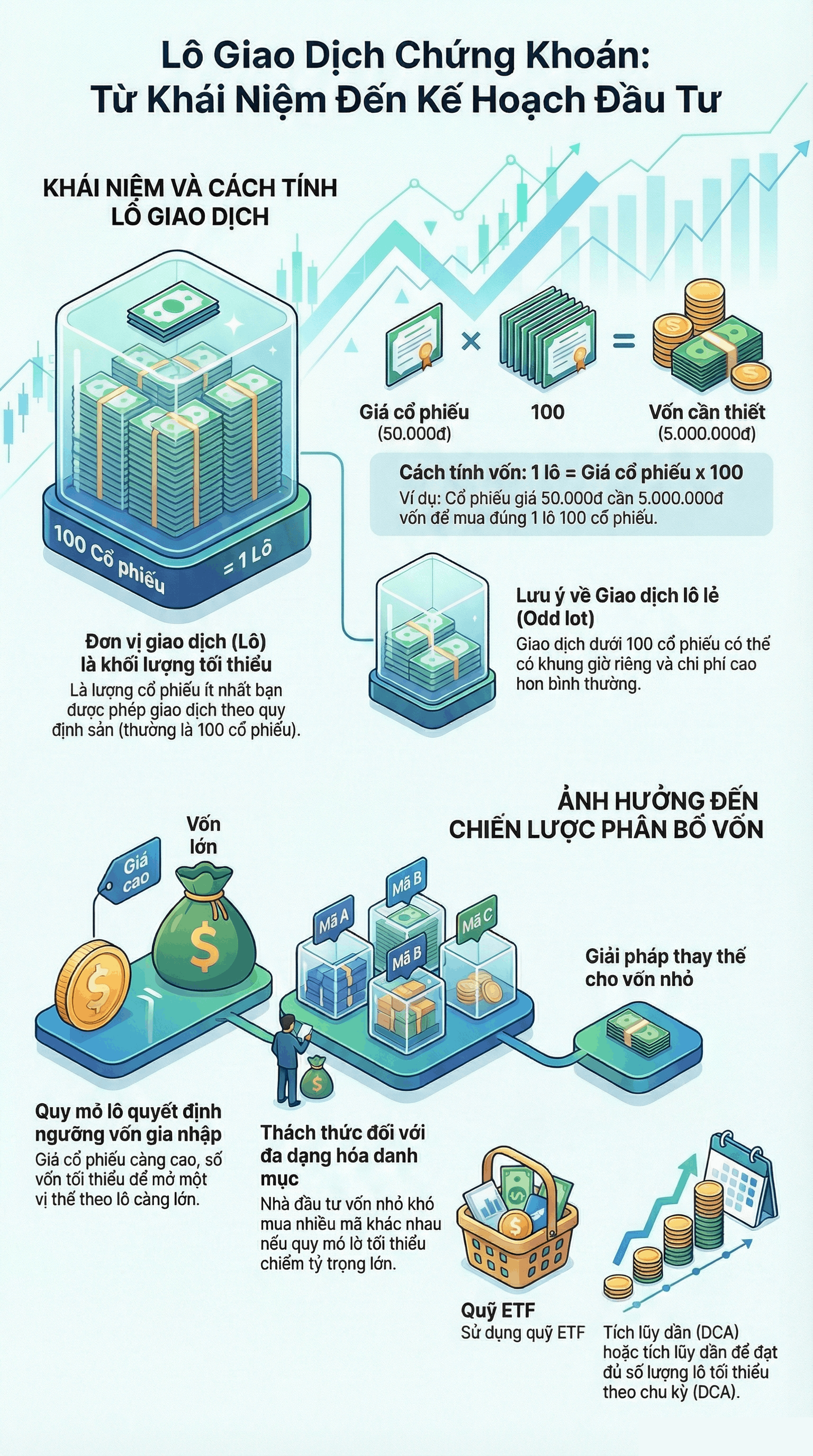
Đơn vị giao dịch (Lô) là khối lượng chứng khoán tối thiểu được phép giao dịch theo quy định của sàn. Ở nhiều sàn, cổ phiếu có đơn vị lô là 100 cổ phiếu (một lô = 100 cổ phiếu), tuy nhiên có thể có quy định khác cho cổ phiếu đặc biệt hoặc giao dịch thỏa thuận.
Vận hành và quy định liên quan
Quy định sàn: Sàn quy định lô tối thiểu, quy định về giao dịch lẻ (odd lot) và phương thức khớp lệnh cho lô lẻ (có thể thông qua phiên riêng hoặc khớp thỏa thuận).
Giao dịch lẻ: Một số sàn cho phép giao dịch lẻ nhưng với điều kiện hoặc trong khung giờ nhất định; phí và chi phí thực hiện có thể cao hơn.
Ảnh hưởng tới đặt lệnh tự động: Nền tảng giao dịch cần hỗ trợ chỉ định số lượng theo lô hoặc chấp nhận số lượng lẻ nếu sàn cho phép.
Ứng dụng/ảnh hưởng tới nhà đầu tư
Đơn vị giao dịch ảnh hưởng tới chiến lược vốn: nếu lô tối thiểu lớn (ví dụ 100 cổ phiếu) và giá cổ phiếu cao, vốn cần để mở vị thế sẽ lớn hơn. Nhà đầu tư nhỏ lẻ cần cân nhắc phân bổ vốn phù hợp hoặc sử dụng sản phẩm hỗ trợ như quỹ ETF để đa dạng hóa với số vốn nhỏ hơn.
Ví dụ: Giá cổ phiếu XYZ là 50.000 VND/cổ phiếu, một lô 100 cổ phiếu tương đương 5.000.000 VND vốn cần thiết để mua 1 lô (chưa tính phí).
Những lưu ý, rủi ro và mẹo thực tế
Luôn kiểm tra quy định lô của từng cổ phiếu trước khi đặt lệnh.
Với vốn nhỏ, cân nhắc mua ETF hoặc tích lũy dần để đạt lô tối thiểu.
Lưu ý phí giao dịch cho lô lẻ có thể không tương xứng so với giá trị giao dịch.
FAQ
Q1: Một lô là bao nhiêu cổ phiếu?
A1: Thông thường một lô là 100 cổ phiếu ở Việt Nam, nhưng cần kiểm tra từng mã vì có ngoại lệ.
Q2: Tôi có thể mua lẻ một vài cổ phiếu không?
A2: Một số sàn/broker cho phép giao dịch lẻ, nhưng có thể giới hạn khung giờ hoặc phí cao hơn; kiểm tra trước với broker.
Q3: Lô ảnh hưởng gì tới chiến lược mua đều (DCA)?
A3: Lô khiến nhà đầu tư phải tích lũy đủ vốn hoặc mua theo chu kỳ để đạt số lượng tối thiểu; quỹ ETF có thể giúp DCA với số tiền nhỏ hơn.