
Tóm tắt
Bài viết này trình bày chi tiết về nguyên tắc và thực hành Đa dạng hóa danh mục (Portfolio Diversification). Mục tiêu là giảm rủi ro không hệ thống (idiosyncratic risk) bằng cách phân bổ vốn vào nhiều loại tài sản, ngành và khu vực. Nội dung bao gồm lý thuyết Modern Portfolio Theory (MPT), hệ số tương quan, cách phân bổ theo mục tiêu tài chính, và chiến lược tái cân bằng (rebalancing).
Giải thích khái niệm/định nghĩa chi tiết
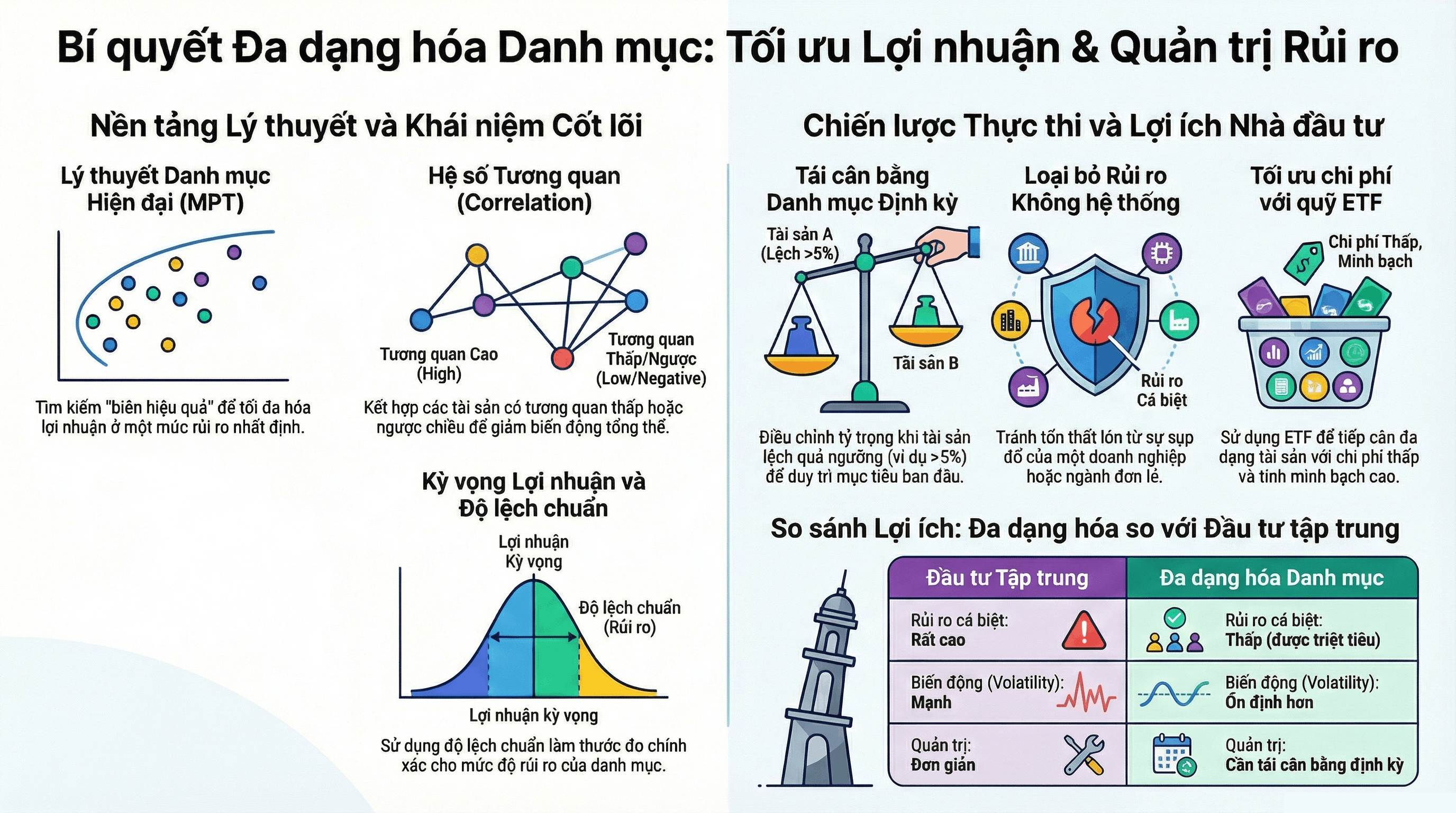
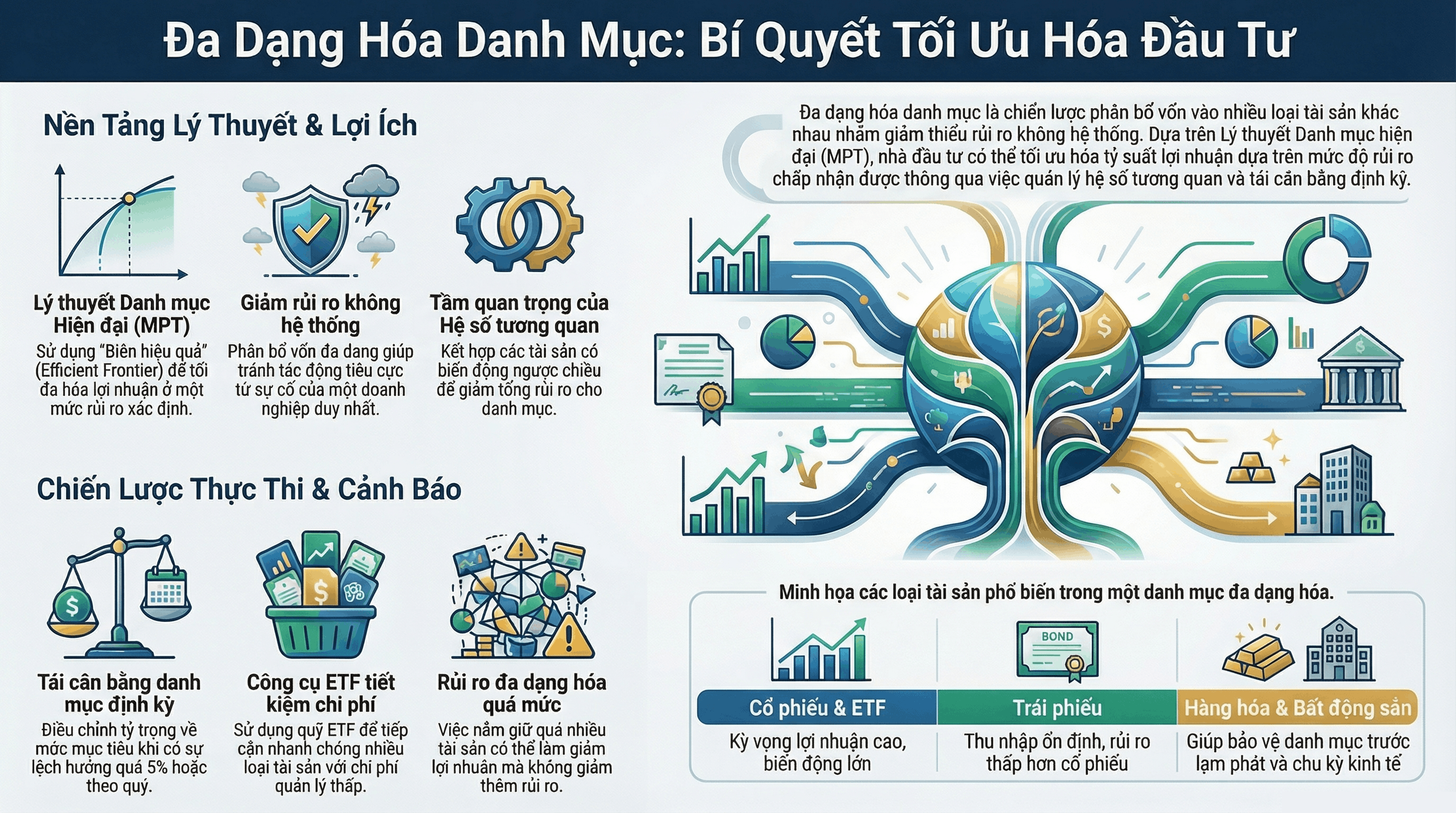
Đa dạng hóa danh mục là chiến lược phân bổ vốn vào nhiều loại tài sản (cổ phiếu, trái phiếu, tiền mặt, hàng hoá, bất động sản, quỹ ETF) nhằm tối ưu hoá tỷ suất lợi nhuận trên mỗi mức rủi ro chấp nhận được. Lý thuyết MPT của Harry Markowitz chỉ ra rằng thông qua đa dạng hoá, nhà đầu tư có thể đạt được frontier hiệu quả (efficient frontier) tối đa hoá lợi nhuận kỳ vọng cho một mức độ rủi ro nhất định.
Các khái niệm quan trọng:
Kỳ vọng lợi nhuận (Expected Return) và độ lệch chuẩn (Volatility) làm thước đo rủi ro.
Tương quan (Correlation): hệ số giữa các tài sản; tài sản không hoặc ngược chiều nhau giúp giảm rủi ro toàn cục.
Tối ưu hoá danh mục: sử dụng công thức Markowitz để tìm tỷ lệ phân bổ tối ưu dựa trên kỳ vọng lợi nhuận, phương sai và hiệp phương sai giữa các tài sản.
Vận hành & quy định liên quan
Một số lưu ý vận hành và khung pháp lý:
Hạn chế đầu tư: một số quỹ hoặc nhà đầu tư cá nhân có giới hạn tỉ lệ nắm giữ cổ phiếu riêng lẻ hoặc nhóm ngành để tuân thủ quy định quản lý rủi ro.
Thuế và chi phí: phân bổ tài sản có thể ảnh hưởng tới thuế; ví dụ bán chốt lời thường xuyên có thể tạo ra thuế lãi vốn.
Báo cáo và minh bạch: với danh mục tổ chức, cần báo cáo chiến lược phân bổ và rủi ro theo quy định của cơ quan quản lý.
Ứng dụng/ảnh hưởng tới nhà đầu tư
Đa dạng hóa giúp nhà đầu tư:
Giảm rủi ro không hệ thống: tránh bị tác động lớn bởi rủi ro đơn lẻ của một doanh nghiệp.
Tối ưu hóa lợi nhuận điều chỉnh theo rủi ro: danh mục hiệu quả có thể đạt mục tiêu lợi nhuận với biến động thấp hơn so với đầu tư tập trung.
Dễ dàng điều chỉnh theo chu kỳ kinh tế: phân bổ linh hoạt giữa cổ phiếu, trái phiếu, và hàng hoá khi chu kỳ thay đổi.
Những lưu ý, rủi ro và mẹo thực tế
Đa dạng hóa quá mức (over-diversification) có thể làm giảm lợi nhuận kỳ vọng mà không giảm đáng kể rủi ro.
Tái cân bằng định kỳ: đặt tần suất (hàng quý, nửa năm) và ngưỡng (ví dụ lệch >5%) để đưa danh mục về tỷ lệ mục tiêu.
Sử dụng công cụ ETF: ETF giúp tiếp cận nhiều tài sản với chi phí thấp và dễ phân bổ.
Đánh giá tương quan thường xuyên: tương quan giữa các tài sản có thể thay đổi trong khủng hoảng (correlation breakdown), do đó cần cập nhật mô hình.
FAQ
Q1: Tôi nên đa dạng hóa như thế nào với vốn nhỏ?
A1: Dùng ETF hoặc quỹ chỉ số để tiếp cận nhiều tài sản; hoặc phân bổ theo tỷ lệ đơn giản (ví dụ 60% cổ phiếu, 40% trái phiếu) và tái cân bằng định kỳ.
Q2: Tái cân bằng có tốn kém không?
A2: Tái cân bằng có thể phát sinh phí giao dịch và thuế; cân nhắc ngưỡng lệch và tần suất để tối ưu hoá chi phí.
Q3: Đa dạng hóa có ngăn chặn thua lỗ lớn trong khủng hoảng không?
A3: Đa dạng hóa giảm rủi ro đơn lẻ nhưng trong khủng hoảng hệ thống, nhiều tài sản cùng giảm mạnh; do đó cần bổ sung quản lý rủi ro khác như hedging hoặc tiền mặt dự phòng.