
Tóm lại
Bài viết này hướng dẫn chi tiết về việc Chuẩn bị vốn trước khi tham gia đầu tư chứng khoán: xác định nhu cầu vốn, lập kế hoạch ngân sách, phân bổ vốn theo mục tiêu (dài hạn, ngắn hạn), quản lý Bẫy và các chi phí liên quan (phí giao dịch, thuế, chi phí vay). Nội dung cũng đề cập đến việc quản lý các tài khoản cá nhân, dự phòng và chiến lược xoay vòng vốn để tối ưu hóa hiệu suất đầu tư.
Giải thích khái niệm/định nghĩa chi tiết
Chuẩn bị vốn (Chuẩn bị vốn) là quá trình xác định nguồn vốn xác định, khả năng sẵn sàng chấp nhận rủi ro và xây dựng kế hoạch sử dụng vốn để đầu tư phù hợp với các cá nhân tài chính tiêu tiêu. Bao gồm các bước: đánh giá tài sản hiện có, xác định khẩn cấp, phân tích vốn bổ sung đầu tư, thiết lập khả năng chấp nhận được và tiền định tuyến.
Các khái niệm quan trọng:
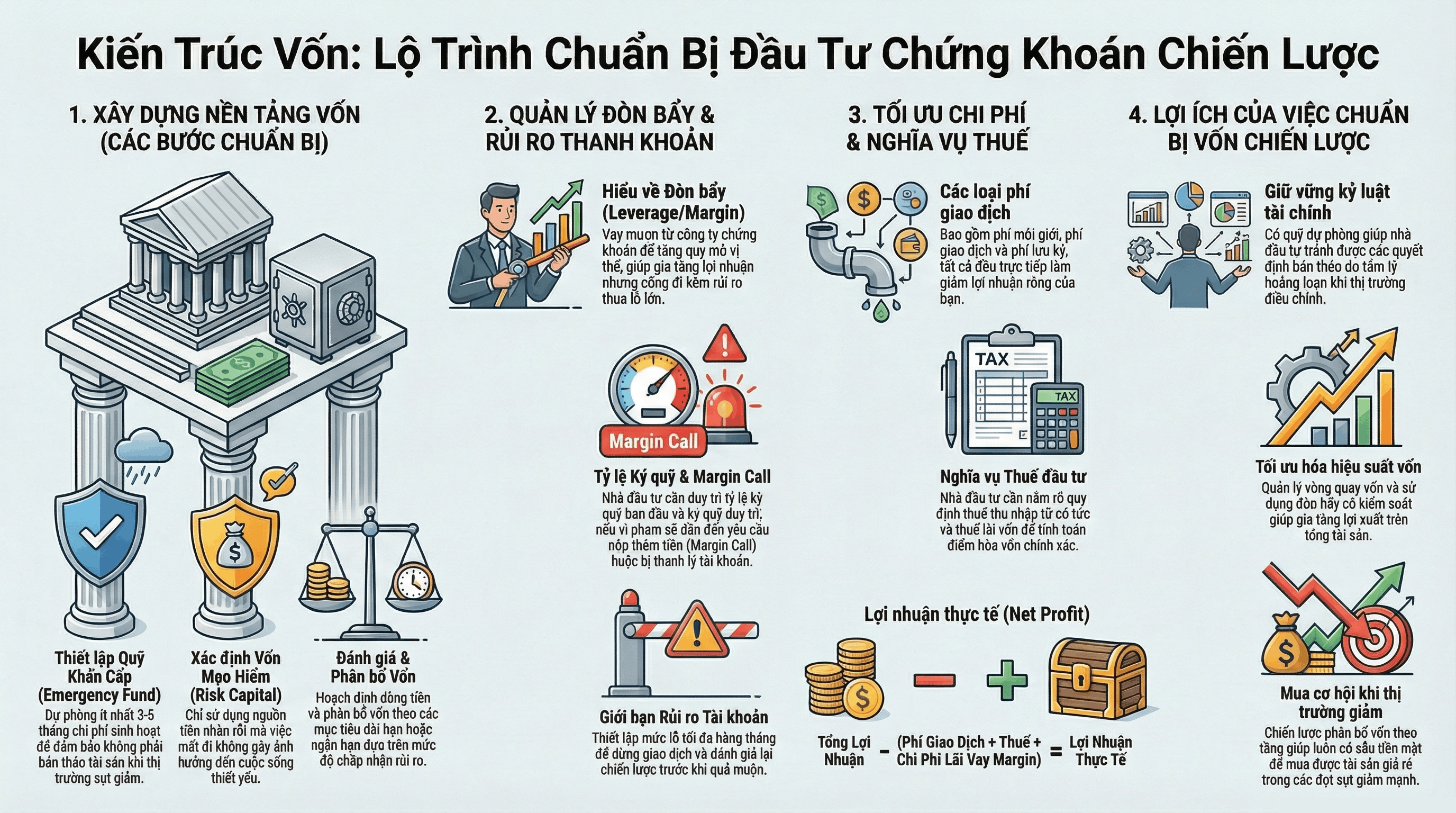
Quỹ khẩn cấp (Quỹ khẩn cấp): khoản tiền dự phòng tối thiểu đủ chi trả 3-6 tháng chi phí sinh hoạt để tránh bán tài sản lúc thị trường giảm.
Vốn mạo hiểm (Risk Capital): phần vốn sẵn có để đầu tư có thể bị mất mà không ảnh hưởng đến cuộc sống — chỉ sử dụng tiền nhà óc.
Đòn bẩy (Đòn bẩy/Ký quỹ): sử dụng khoản vay mượn từ nhà môi giới để tăng lợi nhuận — có thể tăng lợi nhuận nhưng cũng tăng rủi ro thanh lý.
Chi phí giao dịch và thuế: phí môi trường, phí giao dịch, thuế thu nhập từ đầu tư và các khoản phí khác ảnh hưởng đến lợi nhuận ròng.
Vận chuyển & liên kết quy định
Một số yếu tố pháp lý và quy định liên quan tới vốn đầu tư:
Quy định ký tự: nhà môi giới quy định xác định ký tự ban đầu (ký quỹ ban đầu) và quy tắc duy trì (ký quỹ duy trì). Tỷ lệ vi phạm này có thể dẫn tới ký tự yêu cầu bổ sung (gọi lề) hoặc tự động xử lý.
Xác định khả năng tiết lộ rủi ro: nhà môi giới phải thông báo về rủi ro khi sử dụng ký quỹ và xử lý chính sách đối với âm tài khoản.
Quy định thuế: hiểu rõ quy định thuế thu nhập từ cổ tức, lãi vốn và các biểu thuế theo từng thời kỳ để tính toán thu lợi thực tế.
Giới hạn đầu tư cho sản phẩm phức tạp: một số sản phẩm như phái sinh có yêu cầu tối thiểu về kinh nghiệm hoặc vốn đối với nhà tư cá nhân.
Ứng dụng/ảnh hưởng tới nhà tư nhân
Chuẩn bị vốn tốt giúp nhà tư:
Giữ kỷ luật tài chính: tránh bán làm tâm lý khi thị trường giảm nhờ có khẩn cấp.
Ưu tiên sử dụng đòn bẫy: áp dụng đòn bẫy một cách kiểm soát để tăng lợi nhuận trong khi hạn chế lỗi để chấp nhận tối đa.
Quản lý vòng quay vốn: tối ưu hóa số lần mua bán trong kỳ để tăng hiệu quả sử dụng vốn.
Ước tính chi phí thực tế: tính toán trước các loại phí để dự báo thu ròng và thời gian hòa vốn.
Những lưu ý, rủi ro và mẹo thực tế
Không vay nặng nề để đầu tư cổ phiếu nếu không có chiến lược rõ ràng; tránh sử dụng thiết bị cần thiết cho chi tiêu hàng ngày.
Đặt giới hạn rủi ro cho tài khoản: ví dụ đặt mức tối đa lỗi hàng tháng để dừng giao dịch và đánh giá lại chiến lược.
Phân bổ vốn theo tầng: giữ một phần tiền mặt để mua cơ hội khi thị trường giảm mạnh.
Theo dõi và cập nhật quy định: Nhanh chóng lập kế hoạch tài chính quý giá để phù hợp với việc thay đổi mục tiêu và hoàn cảnh cá nhân.
Sử dụng công cụ quản lý tài chính chính: bảng tính hoặc phần mềm để theo dõi danh mục, tỷ suất lợi nhuận và tỷ lệ rủi ro.
Câu hỏi thường gặp
Q1: Tôi nên giữ bao nhiêu tiền khẩn cấp trước khi đầu tư?
A1: Nên có ít nhất 3-6 tháng chi phí sinh hoạt; if nghề nghiệp không ổn định có thể tăng lên 6-12 tháng.
Q2: Có nên sử dụng mức ký quỹ để tăng lợi nhuận?
A2: Ký quỹ có thể có hiệu quả nếu bạn thực hiện chiến lược và quản lý rủi ro tốt. Tuy nhiên, lề có thể dẫn đến lỗi lớn và thanh lý tài khoản nếu trường quay ngược nhanh hơn.
Q3: Làm sao tính chi phí thực tế khi đầu tư?
A3: Tổng hợp phí giao dịch, phí môi trường, thuế, phí lưu ký và phí vay (nếu sử dụng ký quỹ) để tính lợi nhuận ròng và điểm hòa vốn.