Tóm tắt
Bài viết này mở rộng về các loại lệnh phổ biến trên thị trường chứng khoán: lệnh thị trường, lệnh giới hạn, lệnh stop, lệnh OCO và cách sử dụng chúng trong chiến lược giao dịch.
Giải thích khái niệm/định nghĩa chi tiết
Các loại lệnh phổ biến bao gồm:
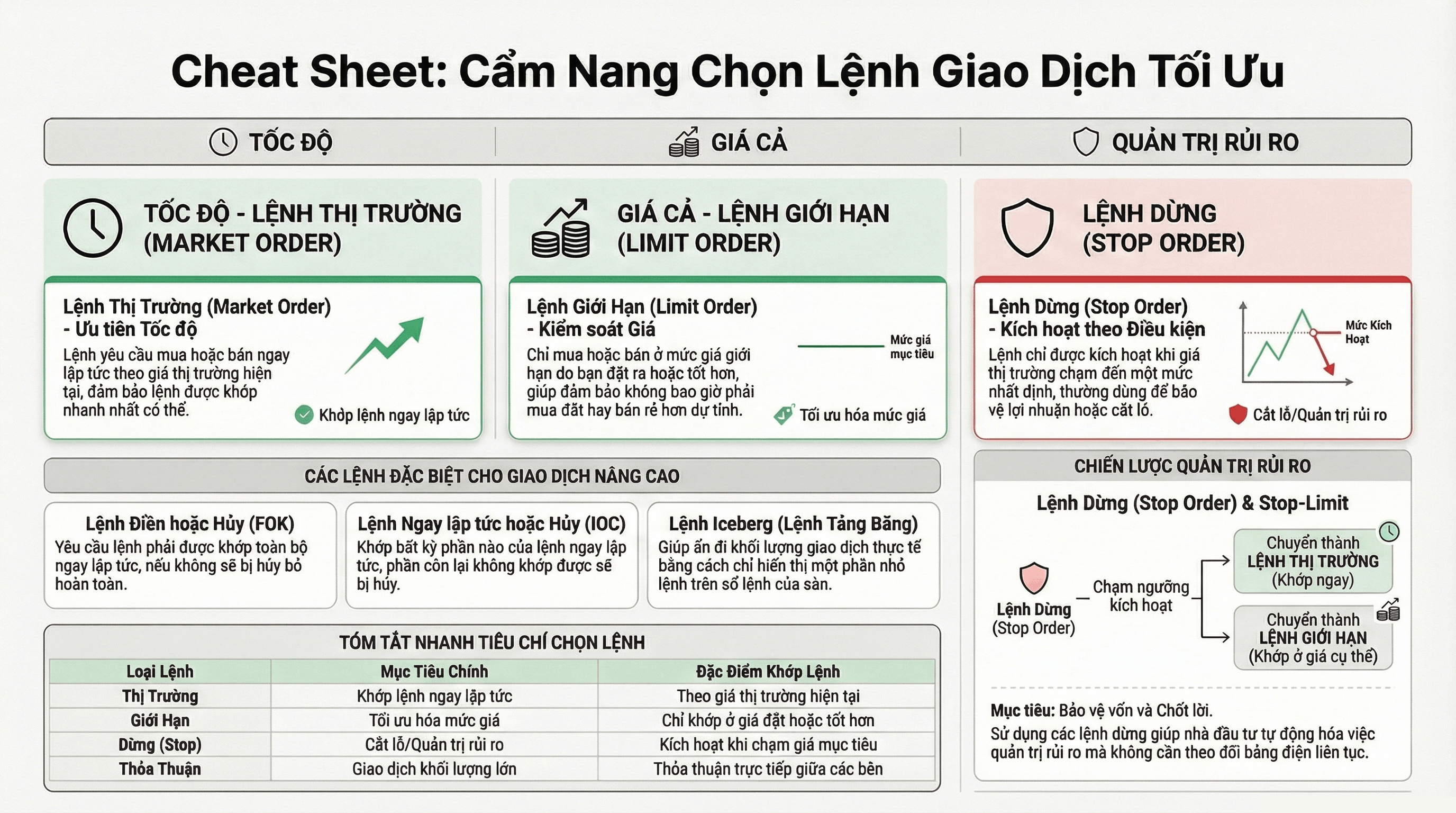
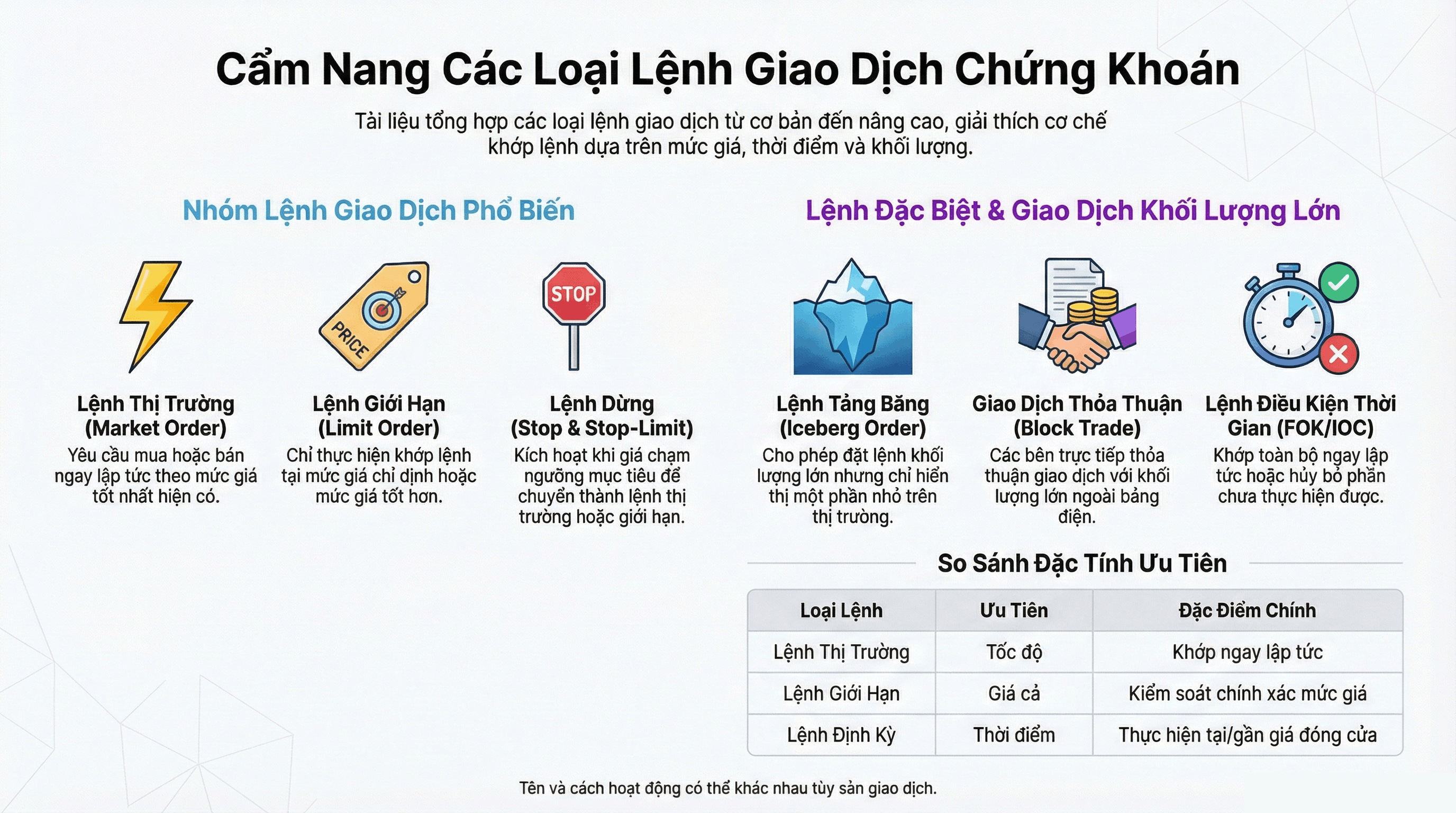
Lệnh thị trường (Market Order): Lệnh mua/bán được thực hiện ngay theo giá tốt nhất có sẵn trên sổ lệnh.
Lệnh giới hạn (Limit Order): Lệnh đặt ở mức giá cụ thể hoặc tốt hơn; lệnh chỉ được khớp khi có đối ứng đạt mức giá đó.
Lệnh dừng (Stop Order/Stop Loss): Lệnh kích hoạt khi giá đạt đến ngưỡng xác định, thường dùng để giảm rủi ro thua lỗ.
Lệnh OCO (One Cancels the Other): Bộ hai lệnh trong đó một lệnh khớp sẽ tự động hủy lệnh còn lại — hữu ích để đặt mục tiêu lợi nhuận và dừng lỗ cùng lúc.
Vận hành và quy định liên quan
Quy tắc khớp lệnh: Mỗi sàn có luân phiên ưu tiên giá, thời gian và loại lệnh khi khớp.
Khung thời gian hiệu lực lệnh: Một số lệnh có hiệu lực trong ngày (day order), một số có thể hiệu lực tới khi hủy (GTC) nếu sàn/broker hỗ trợ.
Giới hạn cho từng loại lệnh: Broker có thể áp đặt giới hạn cho lệnh stop hay lệnh OCO, hoặc không hỗ trợ hoàn toàn một số loại lệnh tự động.
Ứng dụng/ảnh hưởng tới nhà đầu tư
Lựa chọn loại lệnh phù hợp giúp kiểm soát rủi ro và tối ưu giá thực hiện: lệnh giới hạn giúp tránh mua ở giá cao; lệnh stop bảo vệ khỏi giảm sâu; OCO tiện cho chiến lược có mục tiêu lợi nhuận và cắt lỗ tự động. Nhà đầu tư ngắn hạn cần kết hợp lệnh giới hạn và stop để quản lý rủi ro trong điều kiện biến động.
Ví dụ: Mua cổ phiếu B ở 20.000 VND, đặt limit buy 19.500 VND để tránh trượt, đồng thời đặt stop loss ở 18.500 VND để giới hạn thua lỗ. Có thể đặt OCO để tự động hủy lệnh khi đạt lợi nhuận mục tiêu.
Những lưu ý, rủi ro và mẹo thực tế
Tránh đặt lệnh thị trường cho cổ phiếu thanh khoản thấp do trượt giá.
Sử dụng lệnh giới hạn khi muốn kiểm soát giá vào/ra; chấp nhận rủi ro không được khớp lệnh.
Luôn xác nhận loại lệnh mà broker hỗ trợ và phí liên quan trước khi sử dụng các lệnh tự động.
FAQ
Q1: Lệnh thị trường có an toàn không?
A1: Lệnh thị trường an toàn về mặt đảm bảo thực hiện nhanh nhưng có rủi ro trượt giá nếu thanh khoản thấp.
Q2: OCO dùng khi nào?
A2: OCO hữu ích khi bạn muốn đồng thời đặt mục tiêu lợi nhuận và cắt lỗ tự động mà không phải theo dõi thị trường liên tục.
Q3: Lệnh stop và limit khác nhau thế nào?
A3: Lệnh stop kích hoạt khi giá chạm ngưỡng rồi có thể chuyển thành lệnh thị trường hoặc limit; lệnh limit chỉ khớp ở mức giá xác định hoặc tốt hơn.